
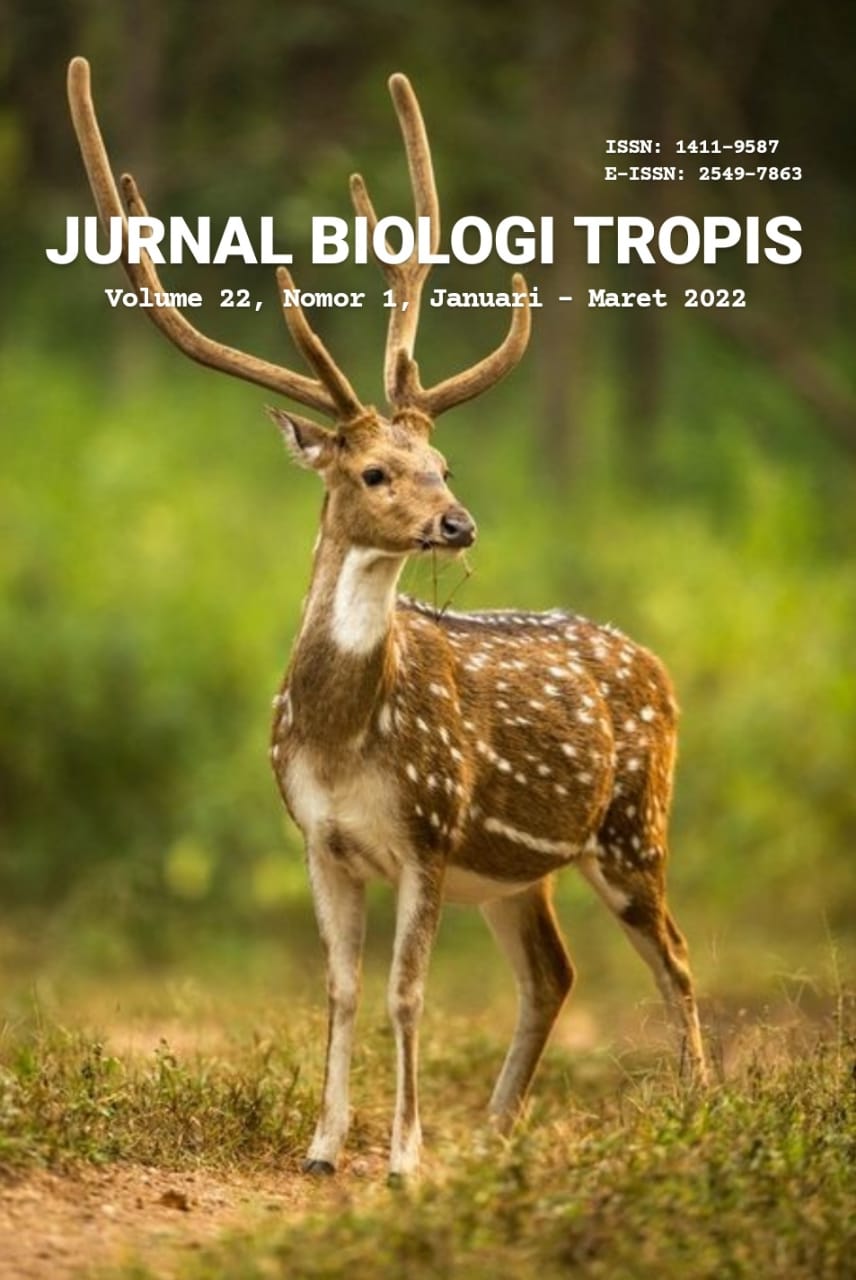
Metabolite Activity of Endophy Fungi Isolated from Betle Leaf (Piper betle) Against Candida Albicans
DOI:
10.29303/jbt.v22i1.3246Published:
2022-01-21Downloads
Abstract
Betle (Piper betle) is a type of plant producing antimicrobial substances and secondary metabolites that are potentially used for the production of new drugs. Candidiasis is a disease caused by Candida albicans and causes diseases of the mucosa of the mouth, digestive tract, and vagina. The study aimed to isolate the betle leaf endophyte fungus (Piper betle L.) and find out the activity of its metabolites against Candida albicans. The research was conducted at the Laboratory of Plant Physiology and Biotechnology, Faculty of Agriculture, University of Mataram. The research method used was descriptive observation. The purpose of this study was to isolate endophytic fungi and their activity against Candida albicans from beetle leaves. The yield of endophytic fungal secondary metabolites was obtained by fermentation method, and the activity of Candida albicans was detected by diffusion method. Isolation test obtained from R&D hospital NTB Province. The research results obtained the endophytic fungi isolated from beetle leaves (Piper betle L.) and obtained the identification results of the fungus Cephalosporium.Keywords:
Betle Leaf (Piper betle L.) Candida albicans Fungal EndophyteReferences
Atmosukarto, I. & Anggia P. (2006). Mikroba Endofit: Sumber Molekul Baru yang Berpotensi. BioTrends, l (2).
Barik B.P, Tayung K, Jagadev P.N, & Dutta S.K. (2010). Phylogenetic Placement of an Endophytic Fungus Fusarium oxysporum Isolated from Acorus calamus Rhizomes with Antimicrobial Acticity. EJBS 2(1): 8-16
Budiprakoso, B. (2010). Pemanfaatan Cendawan Endofit Sebagai Penginduksi.
Ebtasari. I. A. (2007). Uji Daya Antijamur Perasan dan Rebusan Daun Sirih (Piper betle L.) terhadap Candidaalbicans Secara In Vitro. Universitas Islam Indonesia, Jogyakarta.
Gemsih, Milda, Djufri, & Supriatno (2017). ââ¬ÅIsolasi dan Identifikasi Jamur Endofit Pada Daun Jamblang (Syzygium Cumini L).ââ¬Â Jurnal Ilmiah Mahasiswa Fakultas Keguruan Dan Ilmu Pendidikan Unsyiah 2(1):78ââ¬â89.
Hertiani, T & Indah.P. (2002). Minyak Atsiri Hasil Destilasi Ekstrak Etanol Daun Sirih (P. betle) dari beberapa Daerah di Jogyakarta dan Aktifitas Antijamur terhadap Candida albicans. Majalah Farmasi Indonesia.13 (4): 193-199.
Hidayati, N. (2010). Isolasi dan identifikasi jamur endofit pada umbu bawang putih (Allium sativium) sebagai penghasil senyawa antibakteri terhadap bakteri Streptococcus Mutans dan Escherichia coli.Skripsi.Universitas Islam Negeri (UIN)
Ibrahim, A. M. (2013). Uji Efektifitas Ekstrak Daun Sirih Hijau (Piperbetle Linn) terhadap pertumbuhan bakteri streptococcus viridians dengan metode Disc diffusion. Universitas Islam Negeri syarif hidayatullah. Skripsi. Jakarta (http://repository.uinjkt.ac.id/dspace/bitstream/123456789/26341/1/Angga%20Maulana%20Ibrahim-fkik.pdf.
Indriana, h. h. (2005). Eksplorasi jamur endofit antagonis terhadap phytophthora spp. Penyebab penyakit busuk pada batang jeruk.Skripsi. Jurusan hama
Iptika A. (2014). Keterkaitan kebiasaan dan kepercayaan mengunyah sirih pinang dengan kesehatan gigi. Jurnal Unair. 3(1): 64-69.
Katili, A. S, et al. (2015). Inventarisasi Tumbuhan Obat dan Kearifan Lokal Masyarakat Etnis Bune dalam Memanfaatkan Tumbuhan Obat di Pinogu, Kabupaten Bonebolango, Provinsi Gorontalo.Pros Sem Nas Masy Biodiv Indon. 1 (1): 78-84.
Katzung BG, Susan BM, Anthony JT. Basic and clinical pharmacology. Ed 12th. California: McGraw-Hill; (2011). Ketahanan Tanaman Padi Terhadap Wereng Cokelat Nilaparvata lugens.Skripsi. Departernen Proteksi Tanaman, Fakultas Pertanian, Institut Pertanian Bogor, Bogor.)
Naglik, J.R., Richardson, J.P., & Moyes, D.L., (2014). Candida albicans Pathogenicity and Epithelial Immunity, PLOS Pathogens, 10 (8) : p. 1-4
Noverita (2009). Isolasi dan UjiAktivitas Antibakteri Jamur EndofitDari Daun dan Rimpang Zingiberottensi Val. Jurnal Farmasi Indonesia
.Nurrokhman (2006). Efek Rebusan Daun Sirih P/ada Peningkatan Kepekaan Staphylococcus aureus terhadap Ampisilin in vitro. Jurnal Kedokteran Yarsi 14 (1): 024-028.
Nurul Rahmah, & Aditya Rahman (2010).ââ¬ÅUji Fungistatik Ekstrak Daun Sirih (Piper betle L.) terhadap Candida albicansââ¬Â. Jurnal Bioscientae, 7(2), h.17-24.oral health an overview. J Evolution of Medical and Dental Sciences; 2: 3523-3534.
Saraswati, D. (2011). Pengaruh Konsentrasi Ekstrak Daun Sirih Terhadap Daya Hambat Escherichia Coli. Universitas Negeri Gorontalo. Jurnal Health & Sport.Gorontalo (http://repository.ung.ac.id/get/karyailmiah/463/Pengaruh-Konsentrasi-Ekstrak-Daun-Sirih-Terdadap-daya-hambat-E-coli.pdf.diakses pada02Mei Tahun2017)
Sardi, et al. (2013). Candida species: Current epidemiology, pathogenicity, biofilm formation, natural antifungal products and new therapeutic options. Journal of Medical Microbiology. 62(1).10ââ¬â24.
Sharma (2009). Evaluation of the antimicrobial, antioxidant, and anti-inflammatory activities of hydroxychavicol for its potential use as an oral care agent.Antimicrob.Agents Chemother.53: 216ââ¬â222.
Sinaga, Elfrida. (2009). Isolasi dan Identifikasi Antifungal Bakteri Endofit dari Andaliman (Zanthozylum acanthopodium DC) Terhadap Fungi Perusak Makanan.Skripsi.Universitas Sumatra Utara
Sugiyono (2011). Metode penelitian kuantitatif, kualitatif, dan R & D. Bandung: AFABETA
Suwandi, U. (1989). Mikroorganisme Penghasil Antibiotik. Pusat Penelitian dan Pengembangan PT. Kalbe Farma. Jakarta.
Tan, R.X.; & Zou, W.X. (2001). Endophytes: a rich source of functional metabolites. Nat.Prod. Rep. 18: 448-459
Vilca Veronica Hasiani, Islamudin Ahmad, & Laode Rijai (2015). Isolasi Jamur Endofit dan Produksi Metabolit Sekunder Antioksidan dari Daun Pacar (Lawsonia inermis L.) Laboratorium Penelitian dan Pengembangan Farmaka Tropis Fakultas Farmasi Universitas Mulawarman, Samarinda, Kalimantan Timur
Zahid, F & Ismi, N. (2015). Rebusan Daun Sirih Dan Kunyit Terhadap Keputihan Patologis Pada Remaja Putri.Journals of Ners Community. Universitas Gresik
License

Jurnal Biologi Tropis is licensed under a Creative Commons Attribution 4.0 International License.
The copyright of the received article shall be assigned to the author as the owner of the paper. The intended copyright includes the right to publish the article in various forms (including reprints). The journal maintains the publishing rights to the published articles.
Authors are permitted to disseminate published articles by sharing the link/DOI of the article at the journal. Authors are allowed to use their articles for any legal purposes deemed necessary without written permission from the journal with an acknowledgment of initial publication to this journal.
























